
What Irving Drivers Should Know About Rising Car Insurance Costs Around Las Colinas
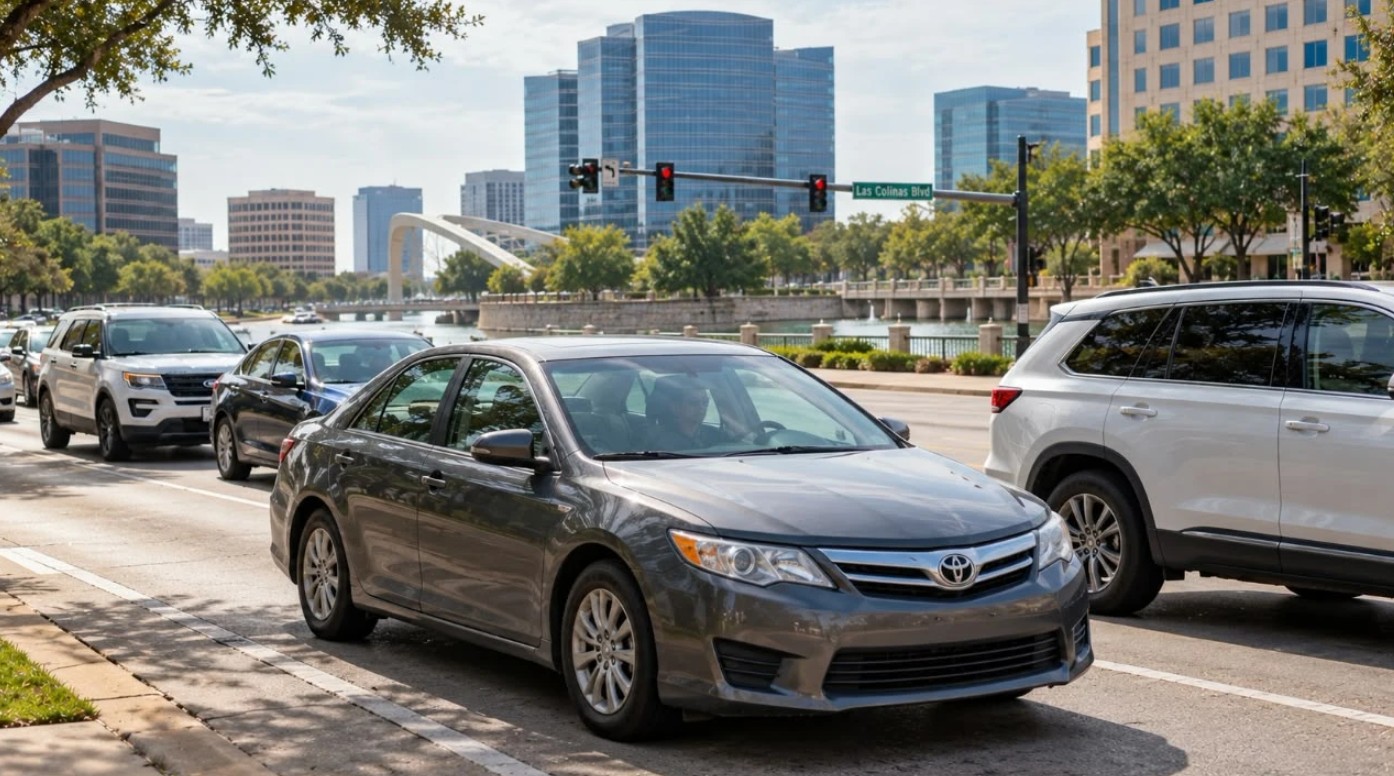
If your last renewal notice made you wince, you have plenty of company. Drivers across Dallas-Fort Worth have watched premiums climb, and Irving sits right in the middle of the pressure: Las Colinas office traffic, DFW Airport on one side, Love Field not far off on the other and some of the busiest highway interchanges in North Texas running through town. Here's what is behind the increases and what Irving drivers can realistically do about them.
Why premiums keep climbing
Repairs cost more. Modern cars are full of sensors, cameras and driver-assistance systems. A minor bumper hit that used to mean a quick body-shop fix can now require recalibrating radar units and cameras. Parts, paint and labor have all gotten more expensive, and insurers price that in.
Claims are more severe. When people are hurt, treatment costs more than it used to, which pushes up the cost of liability and personal injury protection claims.
Weather. North Texas hailstorms regularly produce waves of comprehensive claims across the Metroplex. A single spring storm can damage cars in parking lots from Valley Ranch to the Urban Center, and those losses work their way into local rates.
Traffic. Irving is crossed by SH-114, SH-183, Loop 12, I-635 and the President George Bush Turnpike, and several of those meet in complicated interchanges. More vehicles and more merges mean more chances for collisions, particularly at rush hour around Las Colinas and the airport.
The statewide picture
The numbers from the state's own crash database explain why insurers are cautious. According to TxDOT's 2025 Texas Motor Vehicle Traffic Crash Facts, 3,769 people died in traffic crashes on Texas roads in 2025, and based on reportable crashes, one person was killed every 2 hours 19 minutes. The same report shows Texans drove 314 billion vehicle miles that year, up 1.79% over 2024. More miles and more crashes across the state translate into more claims, and premiums follow.
There is a hopeful note in that report too: the 2025 death toll was 9.38% lower than the 4,159 deaths recorded in 2024. Safer driving shows up in the data over time, and it shows up in individual premiums even faster.
What insurers look at
Your premium reflects where the car is garaged, your driving record, the vehicle, your annual mileage and the coverage you choose. Insurers in Texas may also use credit-based insurance scores within limits set by state law. Two Irving ZIP codes a few miles apart can price differently based on local claim history, theft rates and how many cars are parked on the street.
Texas minimums and what they leave out
The Texas Department of Insurance auto guide states the legal floor: at least $30,000 of coverage for injuries per person, up to $60,000 per accident, and $25,000 for property damage, known as 30/60/25. TDI itself suggests thinking about more, noting that minimum limits might be too low if you cause a multi-vehicle accident or the other driver's car is totaled.
The same guide explains two coverages that come up on every Texas policy. Personal injury protection is included automatically unless you reject it in writing. Insurers must offer uninsured/underinsured motorist coverage, and you have to tell them in writing if you don't want it. On a busy corridor like 183, think hard before turning either one down.
An Irving example
Consider a hypothetical driver we'll call Marcus, who lives near Valley Ranch and commutes to an office tower off Las Colinas Boulevard. He drives a four-year-old crossover, parks in an open surface lot at work and on the street at home, and his renewal jumped noticeably even though he had no claims.
When Marcus sat down with his policy, he found several openings. His comprehensive and collision deductibles were low, and raising them to an amount he could comfortably pay lowered the premium. He had started working from home two days a week, so his annual mileage had dropped, and his insurer counted that once he reported it. He also qualified for a multi-policy discount he had never asked about. He kept his liability limits well above the state minimum and kept uninsured motorist coverage. His new premium was still higher than two years earlier, but meaningfully lower than the renewal offer.
Practical ways to keep costs in check
- Compare quotes at every renewal. Prices for the same driver can vary widely between insurers, and comparing Texas auto insurance options side by side takes less time than most people expect.
- Review deductibles. A higher deductible lowers the premium, but only pick one you could pay tomorrow without strain.
- Report mileage changes. Hybrid schedules mean many Las Colinas commuters drive far less than they did a few years ago.
- Ask about discounts: safe driver, good student, multi-car, multi-policy, paid in full, defensive driving course and telematics programs.
- Protect against hail. Covered parking at work, a garage at home, or a padded hail cover during storm season can prevent the claim in the first place.
- Keep your record clean. Tickets and at-fault crashes can affect your rate for years.
When a fender bender happens on 183 or 635
Even careful drivers get bumped in stop-and-go traffic near the 183 and 114 split or on the I-635 approaches to DFW. Knowing what to do after a car accident protects both your safety and your claim. The short version: move out of live lanes if the cars can be driven, turn on hazards, call police if anyone is hurt or the vehicles can't be moved, photograph the scene, damage and plates, exchange insurance information and report the claim promptly. Don't argue fault at the scene. The photos and the report will speak for you.
Questions to ask your agent this year
- How much would my premium change if I raised my deductible by $500?
- Does my mileage on file match how I actually drive now?
- What would doubling my liability limits cost per month?
- Am I getting every discount I qualify for, including telematics?
- How would a hail claim affect my renewal compared with an at-fault crash?


