
Salt Water Chlorinator Basics: What Irving Pool Owners Should Know Before Making the Switch
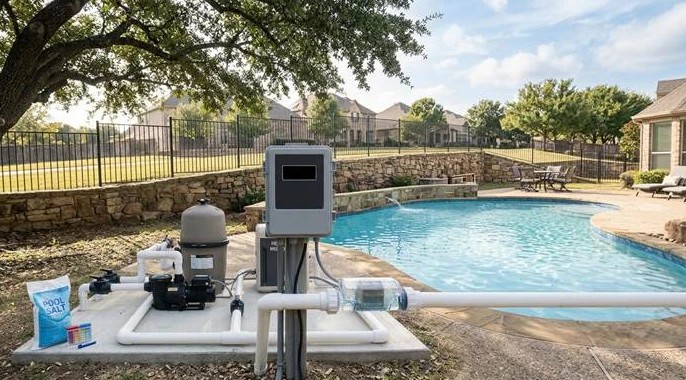
Pool owners across Irving and the wider Metroplex hear a lot about saltwater pools, and the pitch is appealing: less handling of chlorine products and a more consistent supply of sanitizer. Before making the switch, it helps to understand what the equipment actually does, what it needs from you, and what it does not do.
A salt water chlorinator is the device at the heart of a saltwater pool. Despite the name, a saltwater pool is still a chlorine pool. The difference is where the chlorine comes from: instead of adding it from a bucket or feeder, the system generates it from salt dissolved in the water.
How a salt water chlorinator works
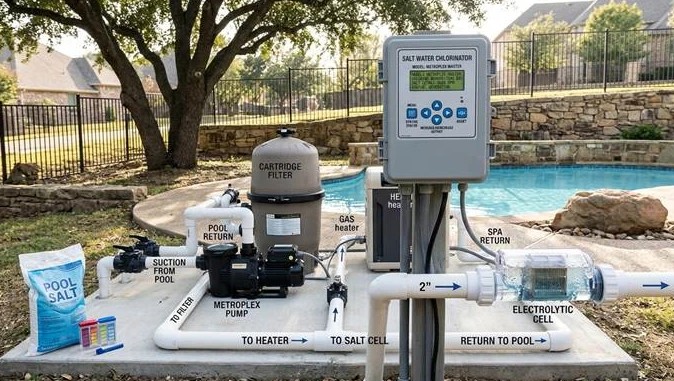
Michigan's Department of Environment, Great Lakes, and Energy (EGLE) answers common questions about the technology in its salt chlorination FAQ. In the agency's simplified explanation, salt water is pumped through a reaction cell, where an electrical charge converts the chloride in the salt into free chlorine. That free chlorine is what sanitizes the pool.
The same FAQ points out that most in-line units need a salt level of about 3,000 parts per million. The right amount of salt to add depends on the size of the pool and the unit, so follow the manufacturer's specifications rather than a general rule of thumb. The agency also says the salt itself needs to meet those specifications. That typically means food-grade salt without iodine or anti-caking additives, and EGLE states that rock salt and road salt are not allowed. It recommends testing the salt level weekly, which is a habit worth adopting even in a home pool.
One point of scope is worth stating plainly. EGLE's guidance is written mainly for public swimming pools, which the state regulates. Its only backyard-specific comment is that minimum cell sizing from manufacturers is for backyard pools. Treat the FAQ as a clear, neutral explanation of how the process works rather than as a rulebook for a residential pool, and rely on your equipment manual for anything specific to your own system.
What it does not do
This is where expectations most often go wrong. EGLE is direct on the point: salt is not a disinfectant or sanitizer. The chlorine that the cell produces from the salt is what does the disinfecting. The salt is the raw material, not the cleaning agent, which is why a saltwater pool is not a chlorine-free pool.
In other words, a saltwater system changes where your chlorine comes from, but it does not remove the need to test and balance the water. The agency's guidance on scale makes the same point from another angle, as the next section explains. Owners who treat the system as a hands-off solution are the ones who end up with cloudy water and frustrated service calls.
Cell care and scale
The generator's cell needs attention. According to EGLE, calcium scale can build up on the cell because of the heat it generates, and that buildup reduces the cell's efficiency. The cleaning itself should follow the manufacturer's maintenance instructions, which is where the agency sends readers for removing it.
Scale is not confined to the cell. The FAQ notes that scale can also restrict flow in the piping near the chlorinator, and that water that is not properly balanced can cause scale in the piping as well. For a homeowner, the practical takeaway is that water balance and equipment care are connected. Keeping the water balanced helps avoid scale in the piping, and inspecting the cell on a regular schedule is easier than waiting for chlorine output to drop before you look.
Choosing and sizing a system
The right size depends on the pool's volume and how heavily it is used, so start with your pool's gallon capacity and the manufacturer's sizing guidance. EGLE lists the pool's flow rate as one of the factors in sizing a unit, so it is worth knowing your pump's capabilities before you compare models. Ask about the expected cell life, how the system alerts you to low salt or scale, and what a replacement cell costs, since that is the main ongoing expense.
Certification is another useful question. EGLE notes that public pools in Michigan can use units certified to the NSF/ANSI 50 standard for inline or batch electrolytic chlorinators, and homeowners can reasonably ask a manufacturer whether a given model carries that certification too.
Doheny's, a family-owned pool supplier that says it has been serving pool owners since 1967, carries salt systems as a dedicated category alongside its other pool equipment. Comparing systems within a single category makes it easier to line up sizing and features side by side, and a supplier that sells chemicals as well as equipment can help you plan the rest of the routine, from test kits to balancing products.
Questions owners ask
Is a saltwater pool chlorine-free? No. The system generates chlorine from salt, and EGLE is clear that the salt itself is not the sanitizer. The water still needs to be tested and balanced.
Can I use any salt? Check the manufacturer's specifications first. EGLE says the salt should meet them, which typically means food-grade salt without iodine or anti-caking additives, and it rules out rock salt and road salt.
How often should I test the salt level? EGLE recommends weekly testing for the salt level.
How often does the cell need cleaning? It depends on the water and the model. Check the manufacturer's guidance, and inspect the cell regularly for scale.
For Irving homeowners weighing the switch, the practical approach is to learn the system's requirements first and compare equipment second. Once you understand the salt levels, the cell care and the water testing that still applies, comparing models becomes easier. Doheny's salt systems category is a useful place to begin that comparison, and the EGLE overview linked above is worth reading before you buy.


