What to Expect When Moving to Irving, Texas
Moving to Irving, Texas, places you in one of the most centrally located and economically dynamic cities in the Dallas-Fort Worth metroplex. Roughly equidistant from downtown Dallas and Fort Worth and just minutes from DFW International Airport, Irving functions as both a corporate powerhouse and a residential community with distinct neighborhoods that cater to different lifestyles. Newcomers quickly discover that the city is not a monolithic suburb. Instead, it offers a range of environments—from polished urban villages to family-oriented planned communities and more traditional residential areas—each with its own character, amenities, and daily rhythms.
Las Colinas: The Urban Heart
Las Colinas is the area most people picture when they think of modern Irving. This large master-planned district blends high-rise living, office towers, waterways, and entertainment in a way few other North Texas suburbs can match. Lake Carolyn and the Mandalay Canal create a distinctive waterfront setting complete with boardwalks, gondola rides, and waterside dining. The neighborhood includes a mix of luxury apartments, condominiums, townhomes, and single-family homes across various villages, some gated and others more open.
Living in Las Colinas means easy access to major employers, including corporate headquarters and regional offices that draw professionals from across the metro. The DART Orange Line provides light-rail connections to downtown Dallas and the airport, reducing reliance on highways for some commutes. Evenings and weekends often revolve around the Toyota Music Factory, an entertainment complex featuring an indoor-outdoor pavilion that hosts national touring acts, a movie theater, restaurants, and bars. The area feels walkable in pockets, especially around the Urban Center and Water Street, though most residents still keep a car for broader errands.
Valley Ranch: Family-Friendly Canals and Green Space
Just north of the core of Las Colinas lies Valley Ranch, a more residential planned community known for its network of landscaped canals, walking trails, and neighborhood parks. Developed primarily in the 1980s and 1990s, it offers a quieter suburban feel with tree-lined streets, single-family homes, townhomes, and apartments. Families often choose Valley Ranch for its parks, recreation centers, sports fields, and relatively strong access to schools. The community maintains a cohesive, deed-restricted character that many residents appreciate for long-term livability.
Valley Ranch provides a middle ground between the higher-energy environment of central Las Colinas and more traditional neighborhoods farther south. It is still close to major highways and employment centers while offering more space and a stronger neighborhood identity. Outdoor activity is a defining feature—residents regularly use the trails that connect to the broader Campion Trail system.
The Irving Heritage District and Other Residential Areas
The Irving Heritage District represents the city’s historic core. Located near Main Street and the original town center, it features a mix of older homes, renovated properties, local shops, and dining. The district has a more walkable, small-town feel compared with the newer planned communities and includes a Trinity Railway Express station that offers convenient rail service toward Fort Worth. For those who prefer character and a connection to Irving’s roots over master-planned amenities, the Heritage District and nearby older neighborhoods provide an appealing alternative.
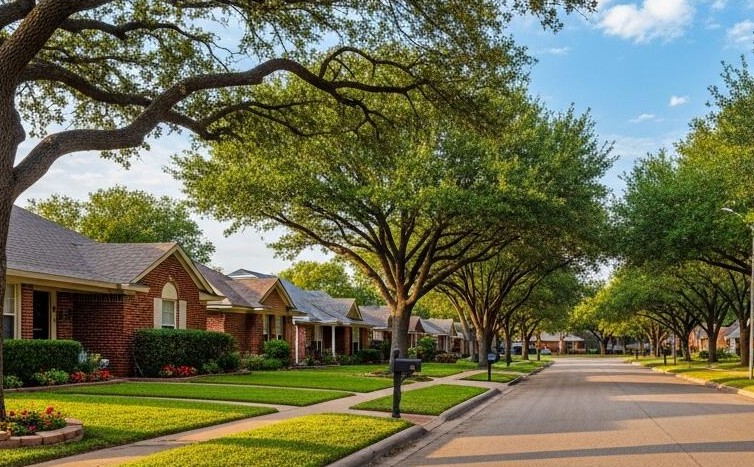
Other pockets, such as the Hospital District near Baylor Scott & White Medical Center – Irving, offer quieter streets with mature trees and traditional housing stock. Areas farther south and west tend to be more affordable and culturally diverse, with strong international dining scenes, though they can feel less polished than the northern planned communities.
Entertainment, Arts, and Daily Life
Beyond the neighborhoods themselves, Irving delivers solid cultural and recreational options. The Toyota Music Factory serves as the primary entertainment anchor, drawing crowds for concerts that range from country and rock to Latin and pop acts. The Irving Arts Center provides a complementary focus on visual arts, theater, dance, and educational programming, hosting exhibitions, performances, and community events throughout the year. Parks, trails, and golf courses add outdoor outlets, while the city’s diversity supports a wide range of restaurants—particularly strong in Indian, Mexican, Asian, and Middle Eastern cuisines.
Practical Realities: Cost, Weather, Transportation, and Schools
Expect a cost of living that sits near or slightly above the national average, driven largely by housing. Median home prices in recent years have hovered in the mid-to-upper $300,000s citywide, with Las Colinas and Valley Ranch commanding higher figures depending on the specific property. Rent for a one-bedroom apartment commonly falls in the $1,300–$1,600 range, though luxury options in Las Colinas run higher. Texas has no state income tax, which improves take-home pay, but property taxes are relatively high and should be factored into ownership calculations. Utilities can spike in summer due to air conditioning demands.
Weather follows classic North Texas patterns: long, hot summers with temperatures regularly exceeding 100°F, mild winters, and a storm season that includes the possibility of severe weather and tornadoes. Most residents adapt by planning outdoor activities for mornings or evenings during the hottest months and staying weather-aware in spring.
Transportation is heavily car-oriented outside the core of Las Colinas. Highways such as State Highway 183, Interstate 635, and Loop 12 provide good regional access but can become congested during peak times. DART light rail and the Trinity Railway Express offer useful alternatives for airport and downtown trips, yet most households still rely on personal vehicles for daily errands.
Schools primarily fall under Irving ISD, with some northern sections served by neighboring districts. Performance varies by campus, so families should research specific schools rather than relying on district-wide averages. Private and charter options also exist for those seeking alternatives.
Diversity and Community Character
One of Irving’s defining strengths is its demographic diversity. The population includes large Hispanic/Latino and Asian communities alongside White and Black residents, creating a multicultural environment reflected in food, festivals, places of worship, and everyday interactions. This diversity is frequently cited as a positive by newcomers who value cultural variety.
What to Expect Emotionally and Practically
Moving to Irving often means adjusting to a city with multiple personalities. The polished, corporate energy of Las Colinas contrasts with quieter residential zones and more working-class areas. Traffic, summer heat, and the need to choose a neighborhood carefully based on lifestyle priorities are common points of adjustment. At the same time, the central location, employment opportunities, relative housing affordability compared with many coastal markets, and access to both local amenities and the broader DFW region make it an attractive landing spot for professionals, families, and frequent travelers.
New residents benefit from exploring different areas in person, preferably at different times of day, and talking with current locals about schools, commute patterns, and daily routines. Once settled, many appreciate the convenience of airport access, the entertainment options at the Toyota Music Factory, the cultural offerings at the Irving Arts Center, and the distinct identities of neighborhoods like Las Colinas, Valley Ranch, and the Heritage District. Irving rewards those who take the time to understand its varied landscape rather than expecting a single suburban experience.