Former Irving Judge Questions Need for Five Municipal Judges, Blames City Policy for Increased Costs
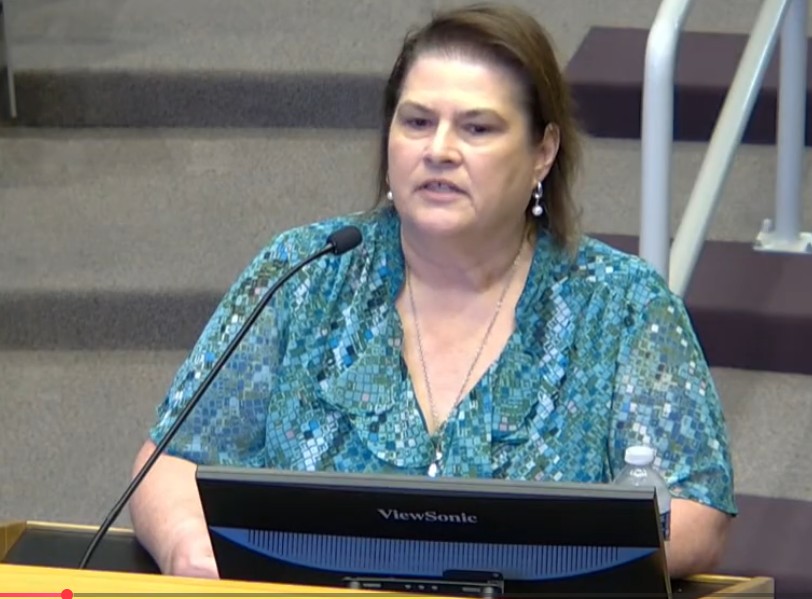
IRVING, Texas - A former longtime Irving municipal judge is questioning why taxpayers are being asked to fund an expanded municipal court operation to handle felony and misdemeanor magistration, arguing that two judges were already performing much of the same work before city officials changed procedures in 2024.
Laura Anderson, who served as an Irving municipal court judge for approximately 14 years before being replaced in 2024, addressed the Irving City Council during its August 27, 2026, meeting as the city moves forward with plans to resume local magistration of people arrested in Irving on Class A and B misdemeanors and felony charges.
Her comments raise questions about the history behind a magistration dispute that city officials have recently portrayed largely as a conflict between Irving and Dallas County over responsibility, staffing and cost.
“Before you approve more than $1 million per year to add two municipal judges, bringing the total to five, I ask one question,” Anderson told the council. “Why does Irving now need five judges to perform work that two judges were already performing in 2024?”
Anderson Says Two Judges Previously Handled Magistration
Anderson served on the municipal court alongside longtime Irving Municipal Judge Rodney Adams.
According to Anderson, she and Adams previously served not only as Irving municipal judges but also as Dallas County magistrates, conducting magistration twice daily on weekdays and once on weekends.
Anderson said everyone being held in the Irving jail, from defendants facing Class C misdemeanor charges to those arrested for serious felonies, would be placed on the next available magistration docket.
“We advised the defendant of their rights, set bonds, prevented unnecessary detention and transfers,” Anderson told the council.
Her argument is significant because Irving officials recently said expanding local magistration will require additional judges, clerks, detention staffing and other expenses.
During a July 30 City Council discussion, Irving officials presented three possible approaches for handling people arrested on Class A and B misdemeanors and felonies. City staff estimated that resuming in-house magistration would require approximately $271,482 in one-time expenses and $519,409 in annual operating costs, for a first-year total of about $795,700.
The staffing proposal presented at that meeting included an additional full-time judge, a part-time alternate magistrate, two magistration clerks and additional detention staffing through overtime. Presiding Municipal Judge Michael Acuña told the council that Irving's three current full-time judges could not absorb the additional workload and estimated magistration hearings would require five to six hours each day.
Anderson disputes the premise that such a large expansion is necessary.
Former Judge Blames Irving's Own Policy Change
Anderson said county magistration in Irving did not end because she or Adams were unable or unwilling to perform the work.
“The city attorney, city manager, and police chief imposed a policy preventing us from doing our jobs,” Anderson said.
According to Anderson, that policy began May 1, 2024. Four months later, she said, she and Adams were replaced.
The controversy dates back to 2024, when Irving changed how certain prisoners were handled. Instead of magistrating some defendants locally and allowing them an opportunity to post bond from the Irving jail, the city began transferring people arrested for offenses including DWI and marijuana possession to the Dallas County Jail.
Anderson publicly criticized that policy at the time.
“You don't want to go to the county jail because it holds 7,000 people and it takes four to six hours to be booked in,” Anderson said in 2024. “Every second somebody sits in jail is a second that they may lose their house, they may lose their car.”
She also raised concerns about defendants being transferred on marijuana cases that she believed were unlikely to be prosecuted by the Dallas County District Attorney's Office.
Anderson and Adams were subsequently replaced as municipal judges. Irving officials denied at the time that their removal was retaliation for their opposition to the city's jail and magistration policies.
More Than 5,000 Defendants Affected, Anderson Claims
During Thursday's meeting, Anderson alleged that the consequences of the policy extended far beyond additional trips to the county jail.
“For more than two years, over 5,000 people were denied timely access to an Irving magistrate and the opportunity to bail out of the Irving jail,” Anderson told council members.
Instead, she said, those defendants were transferred to the Dallas County Jail.
Texas law requires an arrested person to be brought before a magistrate without unnecessary delay and no later than 48 hours following an arrest. At that hearing, the magistrate advises the defendant of the charges and legal rights, addresses eligibility for appointed counsel and sets bail and appropriate bond conditions. The hearing does not determine whether the defendant is guilty.
Anderson also told council members that Irving now faces two federal civil rights lawsuits challenging the city's magistration policy.
Anderson Points to Death of Irving Jail Inmate
Among the most serious issues Anderson raised was the death of Patrick Jones.
According to Anderson's remarks, Jones entered the Irving jail on March 10, 2025, but was not brought before an Irving magistrate.
“More than 24 hours later, he was found unresponsive in his cell during morning cell check and later pronounced dead,” Anderson said.
Anderson mentioned the death while questioning the human consequences of the city's magistration procedures. Her comments did not establish that the lack of an Irving magistration hearing caused Jones' death.
Dallas County Fee Changed the Equation
The current controversy escalated this year as Irving and Dallas County attempted to determine who should conduct magistration for people arrested by Irving police on charges that ultimately fall under county court jurisdiction.
Dallas County Sheriff Marian Brown notified law enforcement agencies that beginning October 1, 2026, the Dallas County Jail would no longer accept defendants who had not already been magistrated unless the arresting agency had an agreement with Dallas County to provide the service.
The county subsequently proposed charging Irving $567 for every defendant Dallas County magistrated during the 2026-27 fiscal year, with the fee increasing 3% annually.
With approximately 4,000 Irving defendants requiring county magistration annually, city staff estimated that paying Dallas County would cost approximately $2.27 million per year.
Irving officials have disputed Dallas County's interpretation of state law. The city maintains that the law requires an arrested person to appear before “some magistrate of the county” and does not require the magistrate to work for the arresting municipality. Irving has argued that because Dallas County courts have jurisdiction over Class A and B misdemeanors and felonies, Dallas County should handle those hearings.
The city's preferred long-term solution has been for Dallas County magistrates to conduct hearings remotely by video while defendants remain at the Irving jail.
City staff estimated that option would cost approximately $135,000 for equipment and software plus $438,000 annually, resulting in a first-year cost of approximately $573,000.
Negotiations failed to produce an agreement in time, however, and the City Council directed staff July 30 to move forward with resuming in-house magistration while continuing discussions with Dallas County.
Anderson: Why Pay to Recreate What Irving Already Had?
Anderson argues that the debate overlooks a fundamental question: If Irving municipal judges were already conducting county magistration before the policy changed, why does restoring that function now require substantially more staffing?
She noted that Irving added a third judge in December 2024 to assist with magistration, but alleged that judge has not magistrated a Dallas County charge.
Anderson also challenged the argument that the additional municipal court operation would simply be another burden on Irving's general fund.
She told council members that, according to the Texas Office of Court Administration, Irving retained nearly $4 million during the previous year from state fines and fees collected through its municipal court and deposited into the general fund.
Anderson urged the council to investigate how the city reached its current position before committing additional taxpayer money.
“Before approving this expenditure, require a public accounting of who stopped county magistration and why, the human and financial cost of that decision, and objective evidence showing why five judges are needed when two previously performed this work,” Anderson said.
“Resume county magistration, but do not make taxpayers spend a million dollars a year correcting a problem the City of Irving created.”
Her comments present a markedly different interpretation of Irving's current magistration problem. City officials have focused recently on the impasse with Dallas County, the county's proposed $567-per-defendant fee and the additional workload associated with bringing magistration back to Irving.
Anderson's argument reaches further back, questioning whether the expensive staffing problem now confronting the city resulted, at least in part, from Irving's own decision to discontinue a system that she says was already handling those hearings locally.